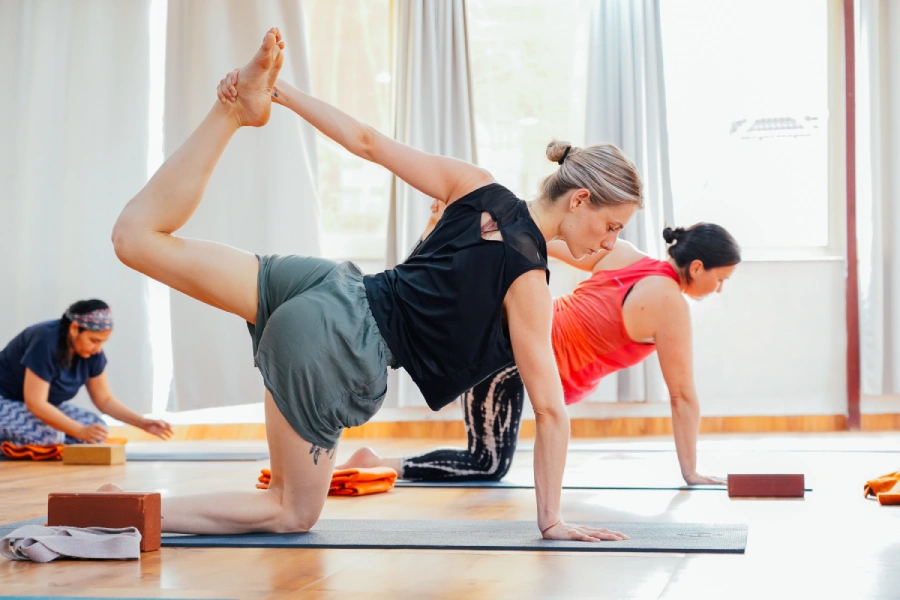
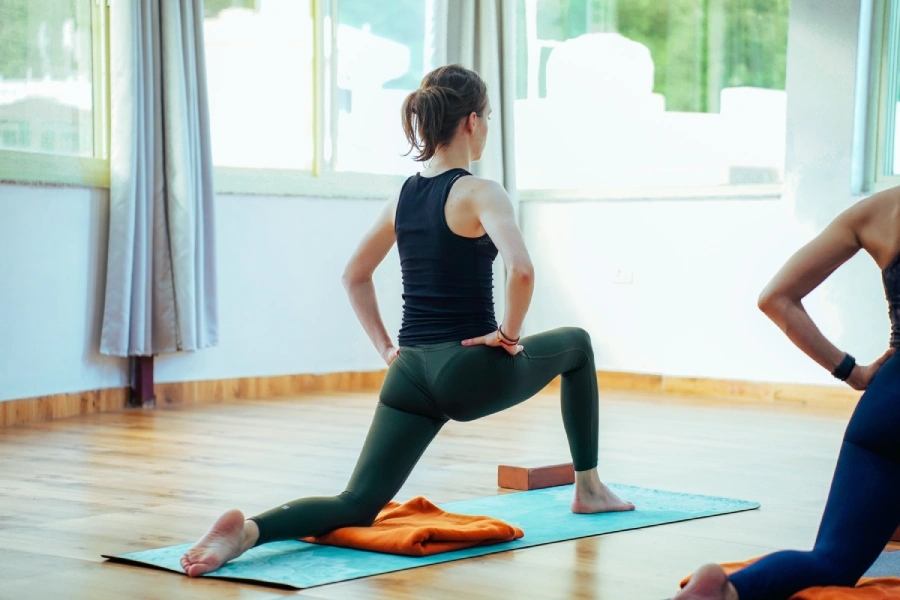
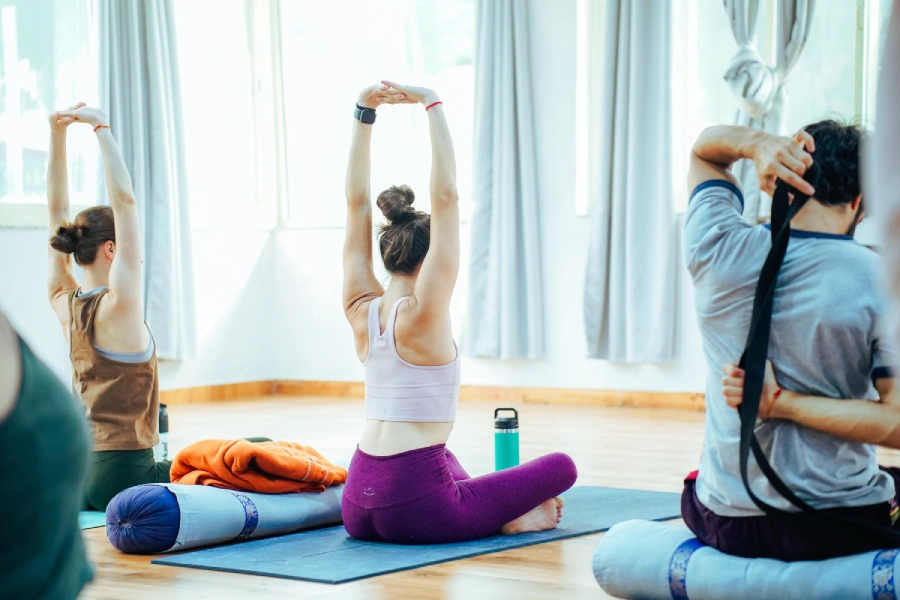
200 Hour Yoga Teacher Training Curriculum’s Brief Overview
There are so many confusions and questions regarding one thing and
we are again here to clear all those questions. We shall here
discuss all details about 200 hours of teacher training course
Below are listed all the topics that are covered in this course by
the Vinyasa Yogshala.
-
Vinyasa Flow Yoga has its meaning, way of doing, advantages,
precautions.
- Breathing exercises or the different forms of Pranayama.
-
What are yoga philosophy and a complete deep understanding of
it?
-
Introduction to the eight ladders of yoga or the Ashtanga yoga.
- 140+ different types of yoga pose.
-
Meditation its meaning, different forms of its practice, and
details about it
- Mantra Yoga
-
Locks or the Bandhas their meaning, way of doing, advantages,
precautions.
-
Different types of asanas and it’s the correct form of
alignment and how to enhance each posture.
- The traditional form of hatha yoga.
-
Anatomy & Psychology of the human body considering yoga and
its rules.
-
Study the entire history of yoga its hypothesis and learn about
all the ancient scriptures.
- Why should we practice yoga and what is its importance?
- What is the science behind yoga?
- Nidra art
-
Mudra or gestures its meaning, way of doing, advantages,
precautions.
-
The shat-kriyas or the six different cleaning techniques of the
body.
Thus this is the major overview of all the things that are to be
covered in Vinyasa Yogshala where our only aim is to improve
someone both spiritually as well as making one physically fit.
Syllabus Of Vinyasa Yogshala 200 Hour Teacher Training Course
Hatha yoga which is considered one of the most important parts of
yoga has to be a part of this program. This is one of the most
important parts of any form of yoga and has got o many advantages
and thus this is considered as a part of almost every yoga. Now we
will always say that one should practice hatha yoga under the
supervision of someone. The poses that include in this are as
follows:-
-
Learning the basics of hatha yoga its history, principle, etc.
-
Then comes the technique and the methods in which hatha yoga
must be learned.
-
The way one should apply hatha yoga when he or she is teaching
it to their students.
-
Sequencing the postures and the structuring of every pose.
-
Surya namaskara with the traditional chanting of the beej mantra
- Then comes the Chandra mascara
-
The basics and the introductory forms of the Sookshma vyaayaama.
-
Next comes the following poses:-
- Standing pose
- Kneeling pose
- Sitting pose.
- Backward bending pose.
- Forward bending pose.
- Core strengthening pose.
- Balancing pose.
- Twisting pose.
- Inverted pose.
- Meditative pose.
Now we are well aware of the syllabus and the topics that are to
be covered under this program. Now we shall talk about the
different types of asana or poses in detail and what are the
topics that we will cover under those.
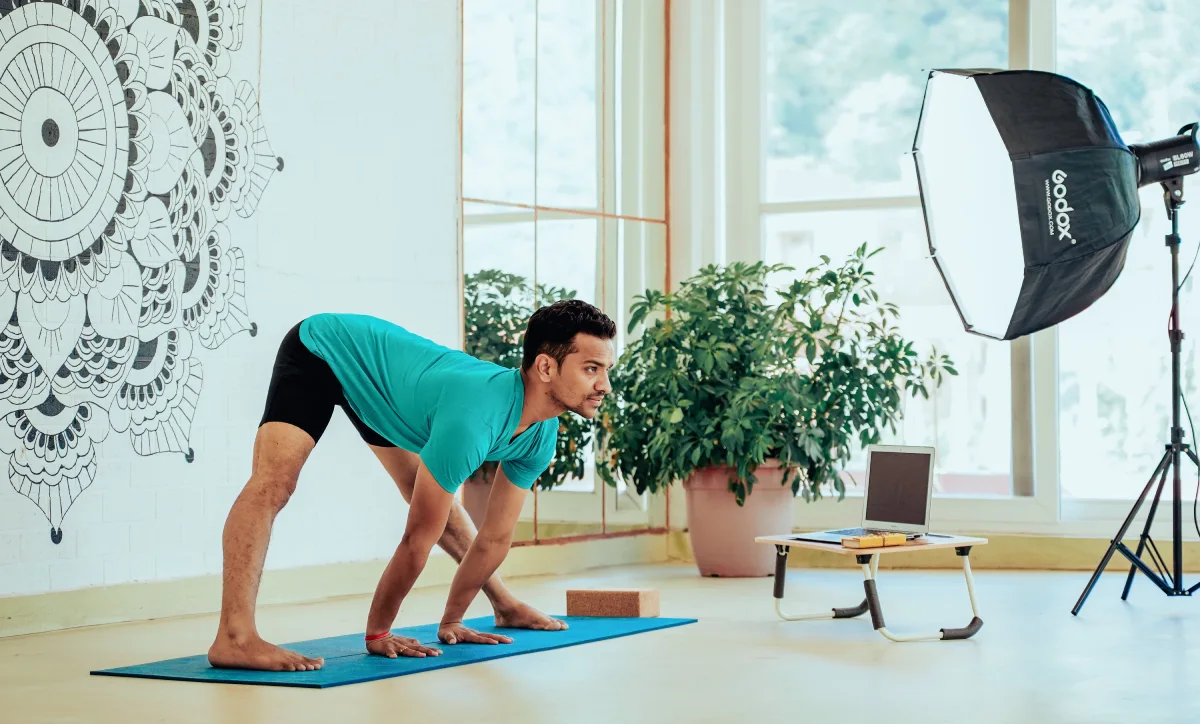
Standing Pose
Standing pose includes the following asanas and is very easy to
perform. All one needs to do is follow the steps properly and the
entire pose can be performed with accuracy and with ease.
- Hasta Padangusthasana & Pada Hastasana
- Parivrtta Tri Konasana
- Parivrtta Parsva Konasana
- Utthita Parsvottanasana
- Utthita Hasta Padangusthasana
- Utthita Eka Padasana
- Ardhabaddha Padmottanasana
- Virabhadrasana A, B and C.
- Utthita Tri Konasana
- Utthitan Parsva Konasana
- Prasarita Padottanasana A, B, C & D
- Utthita Parsvasahita
- Ardhabaddha Padmottanasana
Kneeling Asana
Next up we have the kneeling asana which is helpful in so many
different ways. This helps in treating problems of digestion than
any sort of joint error etc. Doing all these asanas is very easy
and also provides flexibility to the body. Doing all these asanas
especially the kneeling asana keeps the body fit and healthy.
Let's see what the kneeling asana are:-
- Vajrasana- best asana for digestion
- Balasana- best for reliving any sort of tension or stress
- Ushtrasana- reduces back pain
- Marjariasana A, B, and C- helps in improving flexibility.
Sitting Asana
We can very much understand from the name itself that how we are
to perform these asanas. Here all the poses that are involved are
sitting postures and can be done very easily. All these poses do
not require much effort and get covered within minutes. Let's see
what are the sitting postures that we are to cover in the VInyasa
Yogshala 200 hour teacher training course.
- Navasana- helps in strengthening the abdomen.
-
Paschimottanasana A, B, and C- stretches the muscles of the back
from head to toe.
-
Tri-anga Mukha Eka Pada Paschimottanasana- helps in getting rid
of fatigue
- Konasana A & B- works at the lower back, hips, etc.
-
Lolasana- works in strengthening the lower back, arm, and wrist.
- Kukkutasana- develops the balance and stability
-
ArdhaBaddha Padma Paschimottanasana- helps in stretching the
shoulder area
-
GarbhaPindasana- helps in relaxation of the whole spine area.
-
Marichyasana A, B, and D- helps in boosting energy in the body
- Purvottanasana – works on the muscles of the body
-
BaddhaKonasana A & B- soothes menstrual problems and
discomfort helps in digestion
-
BhujaPidasana- helps in building strength in the wrist, arms
body.
-
JanuSirsasana A, B, and C- helps in getting rid of stress,
anxiety.
Backward Bending Asana
A backward bending pose is a form of a yoga pose that involves
working on the back and releases all kinds of stress and anxiety
and also is helpful for those who suffer from back pain. This can
also be a dedicated form of art precisely for people who are
having back issues. Thus let us see what are the different forms
of asanas involved in backward bending asana.
-
Saral Bhujangasana – if you are someone who wants to tone
the buttock and strengthen the spine the go for this backward
bending asana.
-
Bhujangasana – helps in stimulating the abdominal organs
-
Tiryak-Bhujangasana –If you are someone who has a postural
defect or problem then this is the pose that will help you
correct that.
-
Sarpasana – will help in strengthening the chest and the
shoulder.
-
Ardha Shalabhasana - will help in strengthening the lower back.
-
Saral Dhanurasana – treats any problems in the arm,
shoulder, neck, knees.
- Kandharasana – helps in digestion
-
Ardha Chandrasana – open up the chest and the shoulder.
-
Setu bandh Asana – helps in curing the tired back
immediately
- Gomukhasana – strengthens the hip joint
Forward Bending Asana
This is the asana which involves the forward bend of the body and
thus helps to work in mainly the upper portion. All these asanas
are absolutely helpful and work pretty well. Let's see what are
the asanas or the poses involved.
-
Paschimottanasana – clams the body and relives stress
-
Gatyatmak Paschimottan asana- improves flexibility of the hip
and joints
-
Pada Prasar Paschimottan asana – helps in massaging the
pancreas which is helpful for diabetic patients.
- Janu Sirshasana – helps get rid of belly fat
-
Ardha Padma paschimottanasana- stretches and tones calves
muscles.
- Hasta Pada Angushthasana – improves the boy posture
- Padahastasana – improves concentration
-
Sirsha Angusth Asana – stretches hamstring and thigh
muscles.
-
Utthita Janu Sirshasana – strengthens and stretches
the body
Spinal Twisting Asana
The spinal twisting asana is one of the easiest which involves
laying down on the floor and twisting the spinal to the opposite
side of that the head. This is very easy to perform and s highly
relaxing as well. Let’s see what are the types of twisting
spinal asanas.
-
ArdhaMatsyendrasana or the half spinal twist)- highly useful for
slipping discs and here all you need to do is sit crossed leg
and twist your spine to the opposite side of that of the head.
-
Parivritti Janu Sirsasana or the spiraled head to knee
pose)- improves in breathing and improves digestion.
Now, these were all the exercises or poses that you are to do
while you are involved in the 200-hour teacher training course of
the Vinyasa Yoghala. But there are some other courses and
asanas that one needs to perform let' see what those asanas are.
Advanced Level
-
These are the asanas that one must perform after you have become
little practice. The asanas are thus listed below:-
- Poorna Bhujangasana or the full cobra pose
- Poorna Shalabhasana or the Full locust pose
- Akarna -Dhanurasana or the archer’s posed
- Vashistasana or the Sage Vashisht’s pose
- Bakasana or the Crow Pose
- Inverted pose.
- Hanumanasana or the leg splitting pose
- Gorakshasana or the Sage Gorakhnath’s pose
- Poorna Matsyendrasana or the full spinal twist pose
- Mayurasana or the peacock pose
- Poorna Dhanurasana or the full bow pose
- Balancing pose.
- Padma Mayurasana or the Lotus or bound peacock pos
- Core pose.
- Kurmasana or the tortoise pose
- Astavakrasana or the eight-twists pose
- Chakrasana or the wheel pose
- Vrischikasana or the scorpion pose
Pranayama
This is one of the most important parts of any yoga session and
immense importance is given to this aspect in the Vinyasa
Yogshala. The reason is that there is a pool of people who only
come to learn Pranayama and having complete knowledge of this is
thus very important. These are some of the points that are listed
below that one must cover in the school in this particular topic.
- Meaning of Pranayama.
-
Meaning of Ida or Lunar, Pingala or Solar, and Sushumna
Nadi
- What is the Psychological effect of yogic breathing?
- Different types of pranayama:-
- Kapalbhati pranayama.
- Bhastrika pranayama.
- Brahmari pranayama
- Ujjai pranayama.
- Sheetali pranayama.
- Nadi shodhana
- Importance of diaphragmatic breathing
- What is the five Sub-prana in yogic science?
- Meaning of Nadi.
Bandhas
The Bandha is a type or form of yoga that involves the "binding"
or the tying of the body. Also, this involves holding back or
locking oneself or restraining. There are so many people who
believe that the Bandhas are really difficult to perform but
actually, this is not the case. One can perform it if they have
proper practice and do all the other forms of yoga with proper
clarity. The main factor that is involved here in the
Bandhas is that when you are locking so many muscles of your body
you are actually unlocking the energy levels of your brain. This
gives a relaxing effect to your body and makes it stress-free.
Also definitely will help you fight much physical error but also
this is a great factor. This will regulate all that energy in your
body and will thus help you perform your asanas with clarity and
with perfection. There are so many different topics and important
topics which are to be covered in the Bandhas and here are they.
The meaning and definition of Bandha. Here all the aspects of its
origin and what is this actually is explained in detail with
clarity and details.
Next up is the step and the learning of the fact that why is the
Bandha this important in each and everyone's life. How this
exercise or asana can be such a life-changing event.
Then all the important locks are discussed and also the ways one
can perform each and every lock effectively. There are certain
techniques that one must follow in order to get the locks
correctly those are discussed the locks are as follows:-
- Moola Bandha or Root Lock
- Uddiyana Bandha or Abdominal Lock
- Jalandhar Bandha or Chin Lock
- Maha Bandha or All 3 Locks above together
-
The next and the last point which is covered here is how one can
and should motivate his or her students who are new to this,
What are the things that can motivate one person is a really
important aspect which I covered here at last.
Mudras
A mudra is a form of art or gesture which can be a subtle movement
of the hand and body that actually enlightens your mood and the
mind. This form helps in the awareness in oneself and also helps
in concentration with a deepening thought of mind and the body.
The actions or the mudra involves all form of yoga alike the
asana, pranayama, visualization technique, bandha, or something of
another kind of hand gesture or movement. Here you will not learn
something new each and every day but rather all you need to do is
repeat the same things and gestures each time concentrating on
those which will relax the mind. Here are some of the points that
the Vinyasa Yogshala would cover under the topic Mudra and teach
their students.
-
What is Mudra- its history, philosophy, and origin including all
forms of theory?
- Why the mudra form of art is important?
- What are the advantages of performing Mudra?
- Different forms of mudra:-
-
Gyan Mudra or the Gesture of Wisdom
- Chin Mudra
- Vairagya Mudra
- Akasha Mudra
- Yoni Mudra
- Linga Mudra
- Bhairavi Mudra
- Vayu Mudra
- Hridaya Mudra
- Prana Mudra
- Apana Mudra
- Prithvi Mudra
- Varun Mudra
Ashtanga Vinyasa Yoga
This is again a form of yoga that will help you perform such
asanas that will help calm the body as well as the mind and will
do an internal purification to the body. This will synchronize the
working of the body with the breath and also with the mind. Let us
see what the asana that is involved here are.
Sitting Asana
Sitting asanas are the poses or the asanas which are performed
when one is sitting on their buttock. All these asanas are
involved in this position only.
-
Paschimottanasana A, B, and C- helps in calming the mind and
relieving stress
-
ArdhaBaddha Padma Paschimottanasana- works on the hips and knees
and stretches hamstrings and spine which help in pain relief
-
JanuSirsasana A, B, and C- helps in getting rid of stress and
anxiety
- Navasana- improves the balance in the body
-
BhujaPidasana- build the strength of the arm, wrist,
hands, and core
- GarbhaPindasana- helps in relaxation of the entire spine
- BaddhaKonasana A & B- helps in digestion
- Purvottanasana- relief from Asthma.
-
Tirieng Mukha Eka Pada Paschimottanasana- helps in getting rid
of insomnia
- Marichyasana A, B, and D- helps in twisting the body
- Lolasana- strengthens the abdominal muscles
- Kurmasana- helps in lengthening the back muscles
- Kukkutasana- Contracts and strengthens perineum.
- Konasana A & B- helps reduce the waistline
Standing Asana
The standing asana is that form of pose or asana which involves
all the performing actions in a standing position. This form of
pose usually works on the entire body. The standing asanas are as
follows:-
-
Utthita Tri Konasana- Stretches and lengthens the spine area
-
Utthitan Parsva Konasana- stretches the legs, hips, and
hamstrings
-
Prasarita Padottanasana A, B, C & D- reliefs the lower back
ache
-
Utthita Hasta Padangusthasana- strengthens the legs, muscles,
ankles, and knees
-
Utthita Eka Padasana- relaxes the lower back portion
-
Ardhabaddha Padmottanasana- improves the digestion and
elimination process
-
Hasta Padangusthasana & Pada Hastasana- tones the entire
body
- Parivrtta Tri Konasana- Reduces stress
-
Parivrtta Parsva Konasana- improves blood flow in the spinal as
well as in the lower portion of the body
- Utthita Parsvottanasana- helps treat arthritis.
- Utthita Parsvasahita- helps improve biceps and triceps
- Ardhabaddha Padmottanasana- strengthens the legs
Advance Level Asanas (Optional)
These are dome of the advanced level asana which are involved in
the Vinyasa Yogshala 200 hour teacher training course which is
completely optional.
- Kasyapasana- builds confidence
- UrdhvaKukkatasana A- helps weight loss
- EkaPadaViparitaDandasna- improves posture,
- GandhaBherundasana- Tones the upper arm muscles
- Natrajasana- helps better your digestion.
- Bhairavasana- calms the nervous system.
- Galavasana- strengthens the body
- VipritaSalabhasana- makes the spine strong.
- Hanumanasana- helps in menstruation cramps.
- Raja Kapotasana- relief back pain
Intermediate Asana
- Salabhasana A & B-best for quadriceps
- Dhanurasana- reduces constipation.
- Ustrasan- Improves posture.
-
Kapotasana A & B- reduce the stiffness in the shoulders
- SuptaVajrasana- Correct rounded shoulders
- Bakasana A- Strengthens glutes
- Bakasana B Jump- strengthens inner the thighs.
- Ardha Matsyendrasana- Increase the flexibility
- Yoga Nidrasana- benefits for half-sleep.
- Tittibhasana- strengthens the belly
- PichaMayurasana- Develop Arm Strength
- PichaMayurasana- Improves Balance.
- Gomukhasana A & B- Strengthens the hip joint.
Shatkarma Or Cleaning Process Of The Body
There are six different types of cleaning techniques and purifying
techniques of the body which mainly focus on the tissue and the
organs systems. All these are extremely easy and bring in
tranquility within the body prevailing peace and the best thing is
that it can be performed quite naturally. This can be done just
twice a week along with all the other asanas. Thus let us see what
are the shatkarma poses and what we learn here.
- Meaning and complete details about shatkarma.
-
Who are the people who should be a part of the shatkarma and
people who shouldn’t be and why?
-
What are the preparatory asanas or the preparatory poses that
one must undergo when they are into shatkarma?
- What are the follow-up poses or asanas of the shatkarma?
-
Different types of shatkarma hat the Vinyasa Yogshala school of
teacher training will cover under their 200-hour program:-
- Jala Neti Kriya
- Rubber Neti Kriya
- Vaman Kriya
- Kapalabhati Kriya
- Agnisar Kriya
Thus these are the few things that are covered under shatkarma,
One need not practice it regularly but practicing it sometimes is
surely helpful in many ways.
Adjustment Workshops
- Sukhasana or Seated Comfortable Pose
- Adhomukha Swan Asana or Downward Dog Pose
- Chaturanaga Danadasana or Four limb-Staff Pose
- Parrivritta Trikonasana or Revolving Tri-Angle Pose
- Parrivritta Parsvakonasana or Revolving Side-Angle Pose
- Chakrasana or Wheel Pose
- Sarvangasana or Shoulder Stand
- Sirsasana or Headstand
- Adho Mukha Vrikshasana or Hand-Stand
- Rajkapotasana or Piegon pose
- Paschimottanasana or Seated Forward Fold Pose
- Urdhwa Mukha Swan Asana or Upward-Facing Dog Pose
- Uttitha Trikonasana or Extended Tri-Angle Pose
- Uttitha Parsvakonasana or Extended Side-Angle Pose
- Veerabhadrasana A, B, C, or Warrior Pose
- Setubandhasana or Bridge Pose
- Halasana or Plough Pose
- Pincha Mayurasana or Feathered Peacock Pose
- Hanumanasana or Lord Monkey Pose, Splits
- Bakasana or Crow Pose
Ayurveda
This is something that can be considered as the twin sister of
Yoga. In Ayurveda, there is a concept that says that there are
three Doshas; Kapha, Vata, and Pitta. Here they say that keeping
these three Doshas in a balanced form helps us stay happier and
healthier whereas when these three becomes imbalanced all the
problem in our life occurs at that very moment. This very vital
part of yoga because here we shall learn about the facts that how
we can keep our self's healthy and that is the main job of yoga
teaches which they propagate. There is a special workshop from
ayurvedic doctors which makes this 200-hour course of Vinyasa
Yogshala even more special. In this workshop we will learn the
following things:-
- What is Ayurveda a detailed study on it?
- Ayurveda and the different aspects of it.
- Fundamentals of Ayurveda
- Kapha which is the theme of structure and lubrication
- Vata which means the energy of movements
-
Pitta is the energy of bio-transformation and heat generation
- Prakriti that knows Your Constitution
Meditation
This is the form of art that is most talked about in today's era.
People now take a special class only to learn meditations.
Progressing with time today Vinyasa Yogshala thus has included
meditation entirely separate point of discussion. This will help
you learn meditation on its own and thus will also enhance the
studio and work quality that you will provide in the future. A
complete focus and overview are provided on meditation here at the
200-hour class which includes the following topics.
- What are meditation and a complete detailed study on it?
- History of meditation and its origin
-
What are the steps that involve in the preparation of meditation
-
What is the philosophy that is present in this meditation?
-
How one can do breathe awareness and why it is important along
with a detailed study about it.
- Role of Diaphragmatic Breathing in Meditation.
- Correct meditation technique.
-
Different types of meditation like:-
- Chakra meditation.
- Kundalini meditation.
- Mantra awareness meditation.
- Full moon meditation.
- Breathing awareness meditation.
- Inner light meditation.
- Tarataka
Yoga Anatomy
-
A detailed study about the different body parts and about the
structures.
- Anatomical Movements
- About the different bones and skull
- Deformities of the Spine
- Study about Ligaments and Tendons
-
Anatomy about the spine and the importance of them from the
yogic point of view.
- Respiratory system
- Muscular system
- Nervous system
- Skeletal system
- Yogic joints
- Yogic philosophy
- Safety
Yoga Nidra
Yoga Nidra will include the following topics and is a very short
session that is a part of the 200-hour yoga teacher training
course of Vinyasa Yogshala.
- What is Yoga Nidra?
- Purpose of Yoga Nidra in one’s life.
- What is the origin of yoga Nidra?
- Rues, precautions, and regulations of yoga Nidra.
- Advantages of yoga Nidra.
- Risks involved in practicing yoga Nidra.
-
What is the difference between yoga Nidra? And meditation.
-
Different stages of yoga Nidra. The stages are as follows:-
- Preliminary Relaxation Technique
- Creating a Sankalpa (Intention or Resolve)
- Rotation of Awareness through the Body
- Awareness of Prana
- Awareness of Feeling and Emotion
- Visualization
- The Final Step
Yoga Therapy
- Pranayama
- Shatkarma
- Asanas
Mantra Yoga
This is that form of art that helps s achieves freedom and
perfection in life. If you are someone who is somewhere lost
this can be the best friend you need. Helps in concentrating and
finding a path in life will make your goals very clear to you and
you can achieve whatever you want. There are several different
topics that are covered under this and they are as follows:-
- Meaning of mantra yoga.
-
How to use mantra yoga to create positive vibrations and work on
the energies.
- The mantra us for wisdom and fearless living.
-
How to feel the sound of the vibration with the use of the
mantra yoga.
-
10 different specific yoga mantras that are really helpful in
life:-
- Ganesha Mantra
- Universal Mantra
- Patanjali Mantra
- Shiva Mantra
- Guru Disciple Mantra
- Guru Mantra
- Om Chanting Mantra
- Gayatri Mantra
- Omkar Mantra
- Closing Prayer Mantra
Yoga Philosophy
These include those topics which are a part of the 200 Hour Yoga
Teacher training course at Vinyasa Yogashala®. The topics are as
follows:-
-
Introduction to yoga, its history, origin, and back story.
- What are the principles of yoga?
- Meanings and details on hatha yoga.
-
Details on Ashtanga yoga or the Eight stages of self-balancing
and realization.
- A detailed study on raja Yoga or yogic psychology.
- Pancha Koshas: The 5 sheaths of existence.
- What is the mind?
- What is Chitta (vrritis)?
-
Details on the elements of the universe which involve the
process of evolution.
- Pancha Kleshas or the five sources of pain.
- Prakarti and purusha or the observer and observed.
- What is celibacy and sex in yogic life?
-
The different characteristics of mind are Gunas, Prakash, Kriya,
Stithi.
- Three states of consciousness.
- The four fundamental pillars of life.
- Meaning of kundalini.
- Meaning of chakra
- What is yoga therapy?
- Stress, migraine, insomnia special asana.
- Asana for hypertension
- Asana for heart problem
- Asana for blood pressure
- Asana for diabetic
- Doubt clearing sessions
- Group discussion.
Teaching Methods
-
How one should conduct a class and how much time and energy must
be allotted to which section
- Ethical guide for a yoga teacher.
- Qualities a yoga teacher must have
-
What is a perfect environment and atmosphere for a yoga class
- To demonstrate in a class.
- How one should assist in a class
- What should be the style of teaching?
-
Manual that should be a part of the class and what should the
manual have.
- What are the professional factors of yoga teaching
-
What are some of the elements that should be a part of yoga
teaching?
- Understanding students
-
What are the experiences that one must have when the class is
been taken place outdoor?
Yoga For Health
- Yogic counseling for a healthy life.
- Yogic techniques to use in daily lifestyle.
-
Yoga cures common diseases like Headache, migraine, cold, sinus,
etc.
-
Yoga tools for back issues like backache, slipped disk,
sciatica, diabetes, thyroid, spinal deformities, obesity, etc.